The smart-card supplier list on a B2B marketplace looks identical at first glance: every booth claims "factory direct," "ISO certified," "20 years experience," and "free samples." For a procurement manager running a hotel rollout, a membership program launch, or an asset-tracking deployment, the difference between those claims and reality shows up only after the deposit is paid — in a batch of cards that fails to read, a delivery that slips three weeks past the opening date, or a customer service contact that disappears when a defect is reported. Vetting a smart-card manufacturer properly before the PO lands therefore protects far more than the unit price. This guide walks through the three families of checks professional buyers run — certifications, OEM capacity, and lead time — along with the supporting quality, data-security, and commercial questions that decide whether a supplier is worth signing a frame agreement with.
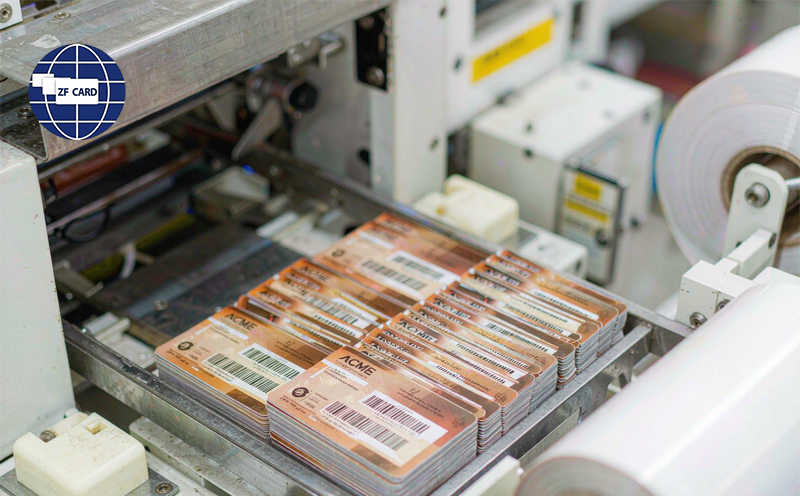
Start with certifications, because they are the easiest claims to verify and the first place a weak supplier hides. At minimum, a legitimate smart-card factory should hold a current ISO 9001 quality-management certificate, issued by a recognized accredited body, with a scope that actually covers card manufacturing rather than a generic business-services scope. For export-facing buyers, ISO 14001 environmental certification matters when hotels, retail chains, and public-institution clients audit their own supply chains. Cards that carry encoded personal or membership data should be supported by an information-security posture — often ISO/IEC 27001 or at least a written access-control procedure for the encoding room. Material compliance is equally non-negotiable: RoHS and REACH declarations restrict heavy metals and phthalates in the plastic and printing inks, CE marking applies to products sold in the European market, and FSC or recycled-plastic documentation supports sustainability claims. A supplier that can only email a scanned certificate — without the issuing body, the certificate number, and an expiry date — should be pushed into a second round: real certificates are verifiable online through the certification body's registry, and an honest factory lets you check.
The second vetting track is OEM capacity, which means the factory's ability to design and produce your specific card rather than relabel a stock blank. The most important question is vertical integration: does the supplier run its own inlay (chip + antenna) line, its own laminating presses, its own offset or screen printing presses, its own encoding equipment, and its own packing station inside one facility? A converter that owns those four or five stages has direct control over quality and lead time; a supplier that outsources inlay lamination to a neighbor and printing to a shop in another city can quote the same price but carries every coordination delay between those vendors. Ask for a floor-plan tour, a video walkthrough, or a scheduled remote factory visit — a genuine manufacturer will provide one willingly, while a trading intermediary usually asks to "arrange a visit later." Also ask about customization depth: can they die-cut non-standard shapes, produce key fobs, wristbands, hang tags, and adhesive labels around the same chip, and match your artwork with offset, screen, hot-stamp, emboss, and variable-data printing on the same line. The wider that capability gap, the more your future product line stays captive to the same factory.
Chip sourcing deserves its own question. Ask which die families the supplier stocks, who they buy NXP, Infineon, STMicro, or Fudan Microelectronics chips through, and whether they can provide a chip-origin certificate for the lot. A supplier that buys mixed genuine and compatible dies to chase the lowest quote will keep this answer vague; a serious manufacturer quotes the chip brand, the part number, and the die origin on the pro forma invoice. For encryption-sensitive projects, ask whether the factory receives your master keys under NDA, how those keys are stored on site, and whether encoding stations are logged and access-controlled.
Third, lead time and production capacity must be checked in commercial language, not adjectives. Ask for monthly output in pieces for blank cards, printed cards, and encoded cards separately, and ask for their current order backlog as it stands today. A standard CR80 printed-and-encoded card from a competent factory should leave the door in 10–15 working days after proof approval; rush runs compress to 5–7 days at a surcharge, and large serialized projects with variable data and encryption often run 15–25 days. The supplier should be able to tell you which chip is on hand versus which must be ordered, because a chip shortage turns a two-week card run into an eight-week project. Tie the delivery date into the contract: a firm working-day commitment, a stated penalty for late delivery, and a clear split-shipment clause when your project opens in phases. Also ask how the factory absorbs a sudden 30–50 percent order increase during your peak season, and what logistics options they actually run — air freight via DHL, UPS, or FedEx for small urgent batches, sea freight for full pallets, and consolidated freight for distributor orders — because a factory that only quotes FOB Shenzhen leaves you solving the last-mile leg yourself.
Quality control sits behind every on-time delivery. Ask for the incoming-material inspection on card stock and chip reels, the in-process sampling standard on the press, the outgoing inspection ratio — 100% read-and-encode testing for encoded cards, AQL 2.5 sampling for printed blanks — and the written defect-rate commitment, which on a mature line should sit below 0.3%. A real factory keeps a retained sample from each production lot for traceability and can open that sample if a future batch question arises. The after-sales clause should state who absorbs cost when a batch arrives scratched, demagnetized, or misprinted: the manufacturer re-runs the failed lot at its own expense and covers the expedited shipping if the delivery date matters, not the buyer absorbing the miss rate.
Data security and compliance round out the audit. For projects that encode customer names, membership numbers, or encrypted sector keys, request a secure encoding room with badge access, video logging, and no portable removable media on the encoding stations. Ask whether the factory signs an NDA before artwork and keys are exchanged, and a DPA (data processing agreement) if personal data crosses into the EU or other regulated markets. Ask what happens to pre-production prototypes and unused encoded cards after approval: a professional factory destroys them under recorded witness rather than leaving them on a sample shelf.
Finally, use reference buyers and proof before signing. Ask for two customer references in your market segment and a short project case history — property type, chip model, batch size, delivery window. Insist on a pre-production sample: a printed, encoded prototype matched to your artwork and your reader, shipped before mass production is approved. The sample validates compatibility, color, print finish, and read range all at once, and it costs far less than rejecting a full run after lamination. Vetting a supplier this thoroughly feels slow on the first project, but it is the reason a frame agreement with one manufacturer beats shopping every order to the lowest quote.
For buyers ready to move past marketplace promises, ZF Card (Zhanfeng) has built its reputation on being the manufacturer behind the supplier audit above. We are a China-based original smart-card factory with over twenty years of focused card manufacturing, supplying contact and contactless cards, hotel key cards, membership cards, RFID stickers, inlays, key fobs, and wristbands to hotel groups, lock-system integrators, membership brands, and asset-tracking solution providers in more than a hundred countries. Our own facility runs inlay bonding, laminating, offset and screen printing, secure encoding, and final packing under one roof; we hold ISO 9001 and ISO 14001 certifications, keep RoHS, REACH, and CE compliance documentation ready on request, and maintain a controlled encoding room for encrypted and serialized projects. Our production team answers RFQs with a firm monthly capacity figure, a working-day lead time tied to your chip stock level, and a clear defect-rate and late-delivery commitment written into the pro forma invoice. English-speaking account engineers own each customer from first inquiry through reorder, so artwork questions, proof revisions, and post-delivery defects never pass through a third party.
The clearest test of any manufacturer is its willingness to send product before a PO. ZF Card ships free smart-card and RFID sample packs to qualified buyers, distributors, and system integrators worldwide — you cover only the courier. Send us your chip or reader model, artwork, annual volume, and target delivery date, and we will reply within one business day with a compatibility note, a factory-direct quote, and a real lead time. Stop qualifying suppliers on marketplace headlines — request your free sample today and run your own certification, capacity, and lead-time audit on a card that actually works on your reader.


 RFID Tag
 HF RFID Tag
 UHF RFID Tag
 RFID Labels or Sticker
 UHF RFID Labels or Sticker
 RFID Epoxy Tag
 RFID Tag Card
 RFID Ear Tag
 RFID Laundry Tag
 RFID Cable Tie Tag
 RFID Clothes Tag
 RFID Jewelry Tag
 RFID Nail Tag
 RFID Screw Tag
 Ceramic RFID Tag
 Special Tag
 HF ABS Tag
 UHF ABS Tag
 ABS Anti-metal Tag
 HF PCB Anti-metal Tag
 UHF PCB Anti-metal Tag
 UHF PPS Tag
 HF PPS Tag
 Industry Application Tag
 RFID Tags For Asset
 RFID Tags For Apparel
 RFID Tags For Books










 EN
 英语



