An access or membership system already running on NXP MIFARE Classic 1K S50 cards often looks like an easy candidate to switch to a compatible Fudan 1K chip and lower the per-card cost. The protocol matches, the sector layout matches, and most standard readers accept either. But a system that was installed around original NXP silicon can reject, misread, or authenticate inconsistently on a compatible die, and that only surfaces after a bulk batch has been issued. Replacing S50 with the compatible die should go through a reader compatibility test plan before any volume order, not after. This guide lays out what to check, in what order, and what results mean the switch is safe.
Before ordering any replacement sample, confirm what the system actually requires. Check whether the reader or the central access platform verifies original NXP silicon, runs anti-cloning detection, or was certified around S50 cards. Note the reader models and firmware versions in the field, and the sector keys and access conditions your system writes. If the documentation states an NXP requirement, a compatible die may be blocked by design; if it only speaks Classic 1K, the switch is a compatibility question that testing can answer.
The test plan has four outcomes to prove. The replacement card must be recognized by the reader, authenticate against the sector keys, read and write the expected data blocks, and hold a stable read distance across repeated taps. Each outcome should be checked against your existing S50 cards as a baseline, so any difference in response or range is visible rather than assumed. A pass on one reader with one card is not enough; the plan has to cover the terminals and conditions the live system uses.
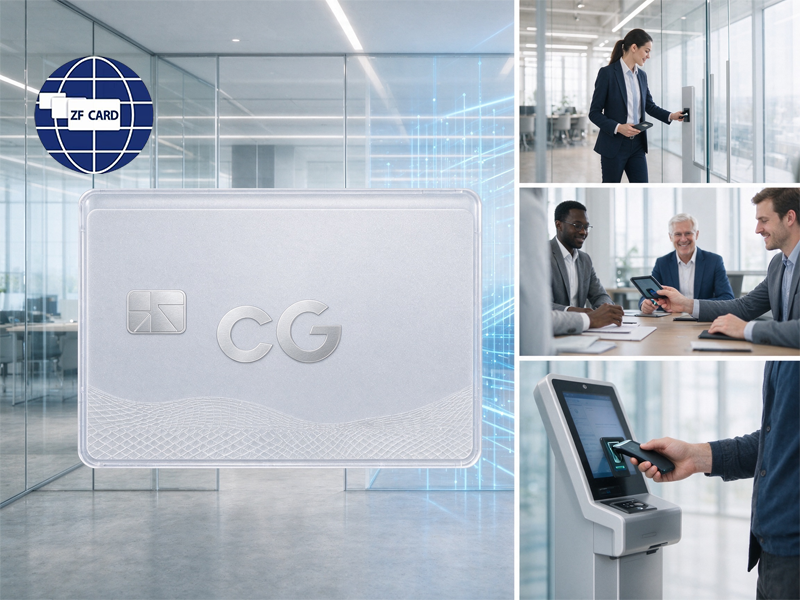
Prepare two matched sample sets before testing. One set is the Fudan 1K replacement die in the same card format, artwork, and chip position as your current credential; the other is your existing S50 card as the control. Keep the reader, antenna, and mounting position identical between the two sets so the comparison isolates the chip rather than the housing or the reader. If your system uses different card formats, prepare a sample of each format you plan to switch.
First test basic recognition. Tap each sample on the reader and confirm the terminal reads a UID and returns the expected manufacturer or card type without an error. Check that the card appears in the access or membership system the same way the S50 does. Record any terminal that fails to recognize the compatible die at all; a reader that does not identify the chip at this stage will not authenticate it later.
Second test sector authentication and data access. Authenticate each sector with your real key A and key B, read the data blocks, and write a test value where the system allows writes, then verify it reads back correctly. Confirm the access conditions behave the same on both dies, and that no sector returns an authentication error or a locked block. This step catches the incompatibilities that basic recognition misses: a card that shows a UID but fails the key handshake will not open the door.
Third measure read distance and repeatability. On the Fudan 1K samples, record the working distance on each reader, then repeat the tap several times at the normal holding angle and position. Compare against the S50 baseline. A compatible die that reads a centimetre shorter, or only on one side of the card, may still work in a controlled turnstile but fail in a casual tap-to-open door. Note any terminal where the read is intermittent across repeats.
Fourth cover the reader fleet and firmware. Test on every terminal model in the field, not just the nearest demo unit, and check whether older firmware behaves differently from newer ones. Readers tuned on original NXP cards can perform slightly better on that silicon, while others handle compatible dies without issue. If the system has a mix of door controllers, scanners, and handheld readers, each should pass before the replacement rolls out to that location.
Fifth check the personalisation and encoding flow. Run the replacement card through your actual encoding station or software: import the CSV or database mapping, write the serial or application data, lock the code area where required, and confirm the exported data matches the source. Verify the encoding equipment treats the compatible die the same way it treats the S50, with no driver or firmware limitation that blocks the compatible chip. A card that reads on the reader but cannot be encoded in your pipeline is not ready for bulk.
Sixth test the real installation environment. Cards live in badge holders, wallets, phone cases, and metal-backed lanyards, and nearby metal or conductive materials can weaken the field. Tap the replacement card in the actual holder and mounting position used on site, and repeat near any metal enclosure or equipment close to the reader. A sample tested loose on a desk can read better than the same card worn in the field, so the environmental check belongs in the plan.
The warning signs are specific. A terminal that rejects the card after reading the UID usually means a signature or original-silicon check. A card that reads on one reader but not another points to firmware or antenna tuning differences. Shorter or one-sided read distance suggests antenna or die bonding variation. Authentication failures on specific sectors indicate a key or access-condition mismatch. Each of these should be recorded by reader model and location before deciding whether the switch can proceed.
Keep the S50 where the system requires original silicon, where a certified reader checks the manufacturer, or where the program cannot tolerate any compatibility risk. Move to the Fudan 1K where the reader fleet is standard Classic 1K, no original-silicon check runs, the test plan passes across the fleet, and the goal is lower-cost bulk credentials for ordinary access and membership. The compatible die is a cost option, not a drop-in replacement for a certified NXP deployment.
Before a full switch, run a pilot batch. Issue the replacement cards to a small group over a short observation period, watch for failed reads or authentication issues in daily use, and retain samples from the pilot lot for traceability. Keep the S50 option available for any terminal that fails the pilot. Document the test results, reader models, firmware versions, and pass criteria, so the decision to roll out the compatible die rests on recorded evidence rather than a single demo tap.
This is the replacement-support profile ZF Card (Zhanfeng) has built over twenty years as a China-based original card manufacturer. We supply both original NXP MIFARE S50 and Fudan 1K FM11RF08 F08 dies, mounted in cards, fobs, stickers, and tags for access control, attendance, parking, and membership programs in more than a hundred countries. Our in-house line covers die bonding, antenna attachment, lamination, printing, encoding, and 100% read testing under one roof, and every quotation names the exact chip model and whether the die is original NXP or Fudan compatible.
We hold ISO 9001 and ISO 14001 certification and keep RoHS and REACH documentation ready for export buyers. English-speaking engineers confirm your reader models, firmware, and key layout before quoting, then send matched S50 and compatible samples for you to run through your own compatibility test plan before production. We stock both original NXP and compatible dies, so a failed pilot can switch back without a supply gap. Each encoded unit is tested after assembly, lot samples are retained for traceability, and our defect commitment and re-run terms are written into the order sheet. Common Classic 1K and high-frequency chips are held in stock, with artwork, data file, and tooling kept on record for repeat orders.
The fair way to approve a chip replacement is to test it on your own readers before the batch. ZF Card ships free S50 and Fudan 1K sample packs to access-control integrators, membership brands, and distributors worldwide — you cover the courier, and we send matched cards for your reader and artwork.
Tell us your reader models and firmware, whether the system requires original NXP silicon, your sector and key layout, and projected annual volume, and we will reply within one business day with a compatibility note, a firm lead time, and a factory-direct quote. Run the compatible die through this test plan on your own fleet first, then decide which die earns the bulk order.


 RFID Tag
 HF RFID Tag
 UHF RFID Tag
 RFID Labels or Sticker
 UHF RFID Labels or Sticker
 RFID Epoxy Tag
 RFID Tag Card
 RFID Ear Tag
 RFID Laundry Tag
 RFID Cable Tie Tag
 RFID Clothes Tag
 RFID Jewelry Tag
 RFID Nail Tag
 RFID Screw Tag
 Ceramic RFID Tag
 Special Tag
 HF ABS Tag
 UHF ABS Tag
 ABS Anti-metal Tag
 HF PCB Anti-metal Tag
 UHF PCB Anti-metal Tag
 UHF PPS Tag
 HF PPS Tag
 Industry Application Tag
 RFID Tags For Asset
 RFID Tags For Apparel
 RFID Tags For Books










 EN
 英语



