If you are writing a new access-control, transit, or campus tender in 2026, the chip spec sheet almost certainly still lists MIFARE DESFire EV1. It has been the default high-security 13.56 MHz card for two decades. But NXP has since shipped EV2, EV3, and the newer MIFARE 4, and EV1 is now in its product-life sunset phase. Buyers are right to ask whether they should keep designing around a chip that may stop being available, or move to a newer platform. This guide walks through what DESFire EV1 actually is, where it still fits in 2026, and when you should spec a different chip instead.
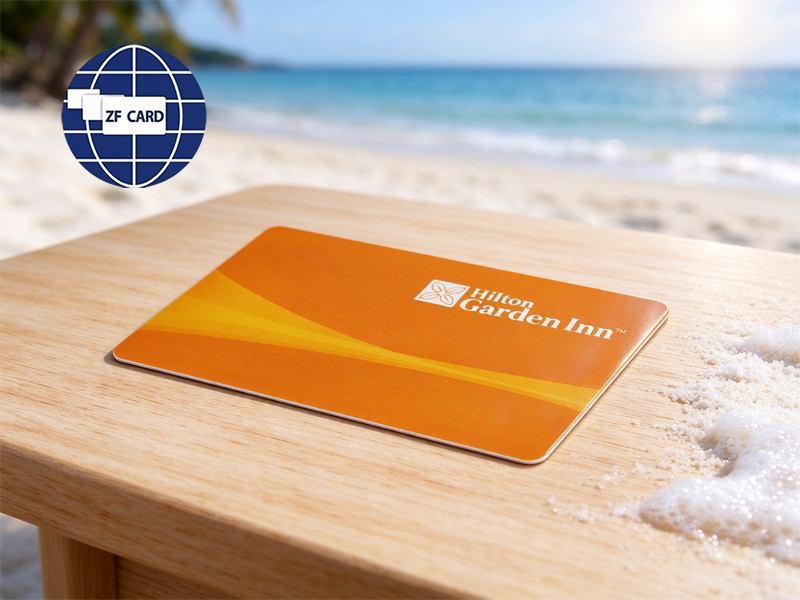
DESFire EV1 is a contactless CPU card built on ISO/IEC 14443 Type A. It was released by NXP around 2006 as a higher-security successor to MIFARE Classic. It comes in 2K, 4K, and 8KB EEPROM variants and supports DES, 3DES, and AES hardware encryption on chip. Unlike Classic 1K, which is a memory card with a fixed sector map, EV1 runs a small file system on silicon, so one physical card can carry several independent applications — access, payments, loyalty, transit — each with its own keys.
That multi-app structure is why EV1 took over transit and campus projects. A single card could open a door, pay for a coffee in the canteen, and swipe on a bus, all without the issuer re-encrypting one shared sector key. It also gave system integrators a standard they could rely on across vendors, which is why thousands of readers, gates, and phone SDKs still speak EV1 natively in 2026.
The reason the question matters now is product lifecycle. NXP formally introduced DESFire EV2 in 2016 and EV3 in 2019, and has since pushed developers toward the EV3 family for new designs. NXP has not announced a hard end-of-sale date for EV1, but buyers who check the current NXP order books see longer lead times, tighter allocation, and a clear steer toward EV3. A project that specifies EV1 today may be building around a chip that is harder to restock in 2027 and 2028.
So should you still order EV1 in 2026? The short answer is: it depends on the project. EV1 is still a reasonable choice when you are extending an existing EV1 installation — adding cards to a building, reissuing staff badges, or restocking a fleet that already runs EV1 readers. Mixing EV3 into an EV1 system usually means rekeying and re-personalization, which costs more than the chip savings. For legacy-compatible tenders, EV1 remains the path of least resistance.
It is also defensible on budget-led projects where AES-level security is not required and the card is a low-risk access credential. EV1 blanks are still priced below EV3, and a card that only opens a gym turnstile does not need the latest anti-cloning features. Many mid-size membership and office access deployments still land on EV1 for exactly this reason.
Where you should move off EV1 is on new builds. If you are designing a campus, transit, multi-tenant, or high-security rollout from scratch, EV3 (or the latest MIFARE 4 family) is the better spec. EV3 adds diversified keys, active tamper detection, faster transaction speed, and smoother support for NFC phone emulation through Apple Wallet and Google Wallet. Those features matter more every year, because guests increasingly expect to open the door with a phone rather than a plastic card.
There is also a security conversation worth having. The older DES and 3DES cipher suites on EV1 are now considered weak by modern standards, and a series of well-documented research papers has shown that a determined attacker can recover keys from EV1 cards under lab conditions. Most enterprise buyers have already migrated to the AES variant of EV1 rather than the 3DES variant, and new projects should always spec AES rather than legacy ciphers. If you still have 3DES EV1 cards in the field, plan a rotation window rather than waiting for an incident.
On the procurement side, watch three things. First, confirm genuine NXP silicon rather than a compatible die — the EV1 protocol is easy to emulate, and several gray-market chips look identical on the outside but fail on AES authentication or multi-app isolation. Ask for chip-origin documentation on the PO. Second, confirm 7-byte UID rather than 4-byte random UID if your whitelist was built around the older format. Third, ask the converter whether they stock EV1 blanks today or need to air-freight them in, because lead-time risk is the main EV1-specific issue in 2026.
For buyers who need to hedge, a trusted converter will usually stock EV1, EV2, and EV3 side by side, and can tell you which readers accept which chip without a firmware change. That lets you restock EV1 for existing buildings and start new projects on EV3 in parallel, without forcing a forklift upgrade. This is exactly the kind of decision a specialist factory is expected to make with you, rather than silently substituting the chip they have on the shelf.
This is where ZF Card (Zhanfeng) has worked for two decades as a China-based original smart-card manufacturer. We stock the full NXP MIFARE family — EV1, EV2, EV3, MIFARE Classic 1K, NTAG, and DESFire-based custom formats — along with Fudan F08 and other documented alternatives, and we buy dies in volume through authorized channels so chip-origin questions are answered on the PO, not after delivery. Our in-house line runs lamination, offset and screen printing, hot stamping, secure encoding, and 100% read-and-encode testing under one roof. We hold ISO 9001 and ISO 14001 certification and keep RoHS, REACH, and CE documentation ready for export buyers.
Because we stock both EV1 and EV3, we can restock your legacy building cards while you spec new projects on EV3. We will also test your chosen chip against your actual reader before mass production, so a mixed-fleet rollout never surprises you on site. English-speaking account engineers own each order from proof through reorder, with a written lead time and a below-0.3% defect commitment in the contract.
The only honest way to compare EV1 and EV3 is to tap both on your own readers. ZF Card ships free MIFARE DESFire EV1 and EV3 sample packs to qualified access-control buyers, system integrators, and campus or transit operators worldwide — you cover the courier, and we send genuine NXP blanks printed and encoded to your spec. Tell us your reader model, your existing UID and key scheme, and whether you are restocking or building new, and we will reply within one business day with a compatibility note, a real lead time, and a factory-direct quote. Stop guessing which chip to spec for 2026 — request your free DESFire sample today and see the read range, the authentication, and the finish that twenty years of specialized card manufacturing delivers.


 RFID Tag
 HF RFID Tag
 UHF RFID Tag
 RFID Labels or Sticker
 UHF RFID Labels or Sticker
 RFID Epoxy Tag
 RFID Tag Card
 RFID Ear Tag
 RFID Laundry Tag
 RFID Cable Tie Tag
 RFID Clothes Tag
 RFID Jewelry Tag
 RFID Nail Tag
 RFID Screw Tag
 Ceramic RFID Tag
 Special Tag
 HF ABS Tag
 UHF ABS Tag
 ABS Anti-metal Tag
 HF PCB Anti-metal Tag
 UHF PCB Anti-metal Tag
 UHF PPS Tag
 HF PPS Tag
 Industry Application Tag
 RFID Tags For Asset
 RFID Tags For Apparel
 RFID Tags For Books










 EN
 英语



